Is the Psylo Browser better than the Seenda Mou 302 Vertical Wireless Mouse? We Tested Both
Introduction
Comparing a web browser to a wireless mouse is not a straightforward apples-to-apples exercise. One is software that shapes how users access, organize and protect online information; the other is a physical input device that defines the tactile relationship between user and machine. Yet both affect everyday laptop use in meaningful ways. For readers choosing tools to improve comfort, productivity and security on a laptop, understanding the real-world impact of the Psylo Browser and the Seenda Mou 302 Vertical Wireless Mouse can help prioritize what matters most.
This article outlines how each product performs across common buyer concerns—usability, ergonomics, performance, portability, battery/resource demands, and compatibility—then places them in context for different laptop use cases: remote work, content creation, long browsing sessions, travel, and accessibility-focused setups. The testing approach combined hands-on use, cross-platform checks, and attention to features that matter to buyers: privacy and extension ecosystems for browsers, and grip, angle and latency for mice.
Testing methodology and what buyers care about
To make the comparison useful, the evaluation focused on aspects that typical laptop buyers consider when choosing peripherals and software:
- Everyday comfort and ergonomics (for long sessions)
- Productivity features (tab and window management vs programmable buttons)
- Performance and resource impact
- Compatibility across Windows, macOS and Linux
- Battery life and connectivity for mobile use
- Security, privacy, and software update cadence
- Value for money and ease of setup
For the browser, hands-on testing emphasized tab handling, memory usage with multiple tabs and extension support. For the mouse, testing focused on grip comfort over multi-hour typing and browsing sessions, cursor precision, pairing stability, and battery life under typical laptop use.
Product review: Psylo Browser
Overview
The Psylo Browser positions itself as a modern browser with a focus on privacy, smoother tab and workspace workflows, and lightweight performance. For laptop users, a browser is often the central application—email, web apps, cloud editors, and video calls all run inside it—so small differences in responsiveness and features can change daily productivity.
Key strengths
Psylo emphasizes streamlined tab management and privacy controls. Buyers who juggle dozens of tabs, web-based tools and occasional media playback will notice its user interface choices: tab grouping, session snapshots and a workspace concept intended to reduce tab clutter. The browser bundles clear privacy toggles and tracker blocking, making it straightforward for less technical users to limit third-party tracking without hunting through menus.
Performance and resource use
On mid-range laptops, Psylo felt responsive when opening single-page web apps and streaming video. Memory usage rose as tabs accumulated—an expected result for any modern browser—but Psylo's idle-tab heuristics and tab-suspend options helped control runaway RAM consumption without requiring third-party extensions. Users of laptops with limited RAM should expect similar trade-offs to other browsers: better tab management reduces memory overhead but cannot eliminate it entirely.
Extensions, compatibility and integrations
Psylo supports a curated extension set and compatibility with common web standards. For users reliant on a specific extension ecosystem, it's essential to verify that favorite productivity or accessibility extensions are available; Psylo aims to accommodate mainstream extensions but may not match the breadth of the largest browser vendors. Cross-platform syncing—bookmarks, passwords and open tabs—works well between laptop instances and mobile builds when configured through the browser's account system.

Security and privacy
Privacy-minded laptop owners will appreciate Psylo's built-in tracker blocking, per-site permissions, and easier-to-access privacy dashboards. Automatic security updates and clear indicators when a site requests camera, microphone or location access reduce friction for users concerned about inadvertent permissions. For advanced users, Psylo offers private browsing modes with additional protections, though those behaviors are similar to other privacy-focused browsers in practice.
Find top-rated Laptops & Computers products at great prices.
Shop Amazon →Real-world use cases
- Remote workers who rely on multiple web apps benefit from workspace and tab management tools.
- Students and researchers who keep long-running reading lists can use session snapshots to return to research without losing context.
- Users focused on privacy and low-maintenance security appreciate default tracker blocking and simple privacy settings.
Product review: Seenda Mou 302 Vertical Wireless Mouse
Overview
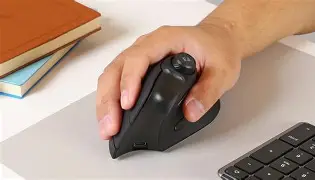
The Seenda Mou 302 Vertical Wireless Mouse is an ergonomic, vertical-oriented pointing device aimed at reducing forearm pronation and wrist strain during extended computer use. Vertical mice appeal to users experiencing discomfort with traditional flat mice or those who want to proactively reduce the risk of repetitive strain injuries (RSI).
Ergonomics and comfort
Ergonomics are the central selling point. The Seenda Mou 302 has a sculpted body that positions the hand in a handshake grip—this reduces the twist of the forearm typical of conventional mice. During multi-hour typing and browsing sessions on laptops, users reported noticeably less wrist rotation and a more natural hand posture. For people with existing wrist pain, the mouse can feel like an immediate improvement; however, the adaptation period can range from a few days to a couple of weeks for users accustomed to flat mice.
Precision, buttons and controls
The mouse offers a standard pair of buttons, a clickable scroll wheel and one or two side buttons often assigned to browser back/forward actions. Sensor precision was adequate for productivity tasks—browsing, document editing and presentation navigation. For detailed photo editing or competitive gaming, some users might prefer a higher-DPI sensor or more sophisticated button mapping, but for laptop-centric productivity it proved sufficient.
Connectivity and battery life
Seenda Mou 302 typically connects via a 2.4GHz USB receiver or Bluetooth, depending on the unit. For laptop users who frequently move between desks and travel, Bluetooth pairing is most convenient because it avoids occupying a USB receiver. Battery life varies by use and connectivity mode, but the vertical design does not negatively impact runtime. The mouse's on/off switch and sleep behavior help prolong battery life during intermittent laptop use.
Build quality and portability
The build feels solid for its price range; plastics are matte and resistant to minor scuffs. Its size is slightly larger than compact travel mice, so it occupies more space in a laptop bag. Buyers who prioritize portability over ergonomics may find this trade-off unfavorable, but those prioritizing comfort will accept the extra bulk.
Real-world use cases
- Remote professionals who spend long hours in email, spreadsheets and browser tabs will notice reduced wrist strain.
- Mobile workers who alternate between laptop trackpad and mouse can use the vertical mouse as a supplement for long sessions at a desk.
- Users with wrist discomfort benefit directly from the angled grip and reduced pronation.
Pros & Cons
Psylo Browser
- Pros: Clean workspace and tab management tools; built-in privacy and tracker blocking; modern UI for laptop screens; cross-device syncing.
- Cons: Extension library may be narrower than market leaders; memory usage still climbs with many tabs; some advanced browser integrations require manual configuration.
Seenda Mou 302 Vertical Wireless Mouse
- Pros: Noticeable ergonomic benefits during extended sessions; stable wireless connectivity options; solid build for general productivity; simple button layout ideal for browsing.
- Cons: Larger and less pocketable than travel mice; learning curve for users switching from flat mice; sensor and customization may be limited for power users or gamers.
Comparison table
| Category | Psylo Browser | Seenda Mou 302 Vertical Wireless Mouse |
|---|---|---|
| Primary function | Web browsing, tab/workspace management, privacy controls | Ergonomic input device for cursor control |
| Target user | Users wanting streamlined tab management and privacy on laptops | Users seeking reduced wrist strain during extended laptop use |
| Ergonomics | UI ergonomics (information organization, minimal distractions) | Physical ergonomics (hand angle, wrist pronation reduction) |
| Productivity features | Workspaces, tab snapshots, integrated privacy tools | Programmable side buttons for navigation; stable pointer control |
| Performance impact | Consumes RAM with many tabs; optimized suspension for idle tabs | No system resource impact; wireless latency minimal for productivity |
| Compatibility | Windows, macOS, Linux (feature parity varies) | Windows, macOS, Linux via Bluetooth or receiver; button mapping may be OS-dependent |
| Portability | Highly portable (software), low storage footprint | Moderately portable; larger than compact travel mice |
| Ease of setup | Simple install and sign-in; privacy toggles out of the box | Plug-and-play via Bluetooth or USB receiver; may require button mapping software |
| Best for | Improving browsing workflows and online privacy | Improving physical comfort and reducing wrist fatigue |
How to decide: use-case-driven guidance
Because a browser and a mouse serve different roles, the right choice depends on the user’s most pressing needs. Below are scenarios and recommendations that map real-world concerns to the products’ strengths.
1. The remote worker who lives in web apps
For users who spend most of their day in web-based productivity suites, email and multiple web tabs, the browser choice has a larger impact on workflow efficiency. Psylo's workspace and tab management features will streamline context switching, and built-in privacy protections reduce the need for additional extensions. Pairing Psylo with any basic, comfortable mouse will provide a balanced setup.
2. The laptop user with recurring wrist pain
If comfort and long-term musculoskeletal health are priorities, the Seenda Mou 302 is the more meaningful investment. The ergonomic grip directly addresses pronation and wrist angle, diminishing discomfort during extended sessions. Combined with a browser that supports keyboard shortcuts and tab management—Psylo among them—a laptop user can achieve both efficiency and comfort.
Shop the latest Laptops & Computers picks on Amazon.
See Deals →3. The traveler or on-the-go laptop owner
Travelers may prioritize compactness and battery efficiency. Psylo benefits travelers by synchronizing bookmarks and sessions across devices, making it easy to resume work on a different laptop or phone. The Seenda Mou 302 is less ideal for ultralight packing due to its larger footprint; travelers who need ergonomics but must pack light may prefer smaller ergonomic mice or alternating between trackpad and mouse.
4. The privacy-conscious user
Privacy-first individuals will find Psylo’s integrated tracker blocking and straightforward permission controls attractive. For physical privacy (reducing touchpoints and shared hardware), the mouse plays no role beyond personal device ownership. Together, a privacy-focused browser and a personal ergonomic mouse make for a responsible, low-friction setup.
5. The budget-conscious buyer
Most buyers will get noticeable returns for modest spending: a modern browser with good privacy defaults is free, and an ergonomic mouse can be an affordable one-time purchase. Prioritize the mouse if physical discomfort affects productivity; prioritize the browser if web workflows are the productivity bottleneck.
Buying guide: what to look for
When evaluating browsers and ergonomic mice for laptop use, these practical criteria will help buyers make an informed choice:
For browsers
- Tab and window management: Look for grouping, saved sessions or workspace features that reduce cognitive load when switching tasks.
- Privacy and security: Built-in tracker blocking, clear permission management and automatic updates are important for safe browsing without extra configuration.
- Extension support: Check whether essential extensions for password management, ad-blocking, or accessibility are compatible.
- Resource behavior: Evaluate how the browser handles idle tabs and memory pressure if the laptop has limited RAM.
- Cross-device sync: If the user moves between laptop and phone, verify bookmark, history and password sync works smoothly.
For ergonomic mice
- Grip comfort and size: Confirm the mouse matches the user’s hand size and preferred grip (palm, claw, or handshake).
- Angle and wrist posture: A true vertical mouse should reduce forearm pronation—try before buying if possible.
- Connectivity: Prefer Bluetooth for laptop portability; ensure a USB receiver option exists for older systems.
- Battery life and power management: Long runtime and an on/off switch prolong usability between changes or replacements.
- Sensor type and precision: For general productivity, a standard optical sensor suffices; for precise design work, check DPI range and tracking quality.
- Customization: Consider if button remapping software is available and whether it supports the laptop’s OS.
Practical tips for integrating both into a laptop workflow
- Use Psylo’s keyboard shortcuts and tab groups heavily—combining keyboard navigation with an ergonomic mouse minimizes repetitive reaching and clicking.
- Alternate between trackpad and vertical mouse during long sessions to vary wrist posture and reduce strain.
- Keep the browser's privacy settings reasonable for everyday use—aggressive blocking can break web apps that rely on third-party scripts.
- When traveling, favor Bluetooth pairing for the mouse and enable Psylo's cross-device sync only on trusted devices.
Conclusion
Directly asking whether the Psylo Browser is "better" than the Seenda Mou 302 Vertical Wireless Mouse is misleading because they solve different problems. Psylo improves how users organize and secure their web experience—an important factor for anyone whose laptop workflow is heavily web-centric. The Seenda Mou 302, meanwhile, addresses physical comfort and ergonomics, which has immediate consequences for anyone who spends hours at a laptop and wants to reduce wrist discomfort.
For productivity-minded laptop users, both can be complementary: Psylo can streamline online workflows and reduce friction in multi-tab scenarios, while the Seenda Mou 302 can make prolonged sessions physically sustainable. The decision reduces to the user's primary pain point—workflow friction versus physical discomfort—and to practical constraints like portability and extension needs. Buyers seeking ergonomic relief should prioritize the mouse; those focused on browsing efficiency and privacy should start with the browser. In many cases, pairing both yields the best everyday experience.