Should You Buy the Enlaps Tikee Mini in 2026? A Deep Dive
I still remember the first week I set up the Enlaps Tikee Mini on the edge of a coastal construction project I was documenting. It was early 2025, and I was looking for something that bridged the gap between the bulky, overkill Tikee 3 PRO+ and the high-maintenance hassle of using a modified GoPro with external battery packs. Now, as we move through 2026, the landscape of time-lapse photography has shifted again, yet this strange, compact little wedge remains one of the most frequently discussed pieces of gear in my kit. After eighteen months of continuous use in everything from sub-zero mountain mornings to humid, salt-sprayed construction sites, I’ve developed a very specific relationship with this camera.
The Tikee Mini was marketed as the "essential" professional time-lapse solution—the one for people who didn't necessarily need the dual-lens panoramic stitch of its bigger siblings but wanted the same industrial-grade reliability and cloud integration. In this review, I’m going to look past the marketing specs and share my actual experience living with the device, the frustrations I’ve had with the MyTikee cloud platform, and whether I think it still holds its value in a world where smartphone sensors and AI-assisted processing have moved the goalposts yet again.
The Reality of the Hardware: Build Quality and Setup
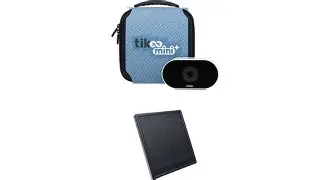
When I first pulled the Tikee Mini out of its box, I was struck by how dense it felt. It’s significantly smaller than the Tikee 3 or 4 series, but it shares that same "monolith" aesthetic. It doesn't look like a camera; it looks like a piece of infrastructure. In my experience, this is actually a huge benefit. Several times, I’ve had to mount this in public or semi-public spaces where a traditional camera rig would have attracted unwanted attention. Because the Mini is a matte black, low-profile box, most people walk right past it thinking it's a Wi-Fi repeater or a light sensor.
The mounting system is one of the first places where I felt a bit of friction. It uses a standard 1/4" tripod thread, which sounds convenient, but the weight distribution of the unit is slightly forward-heavy because of the lens placement. I found that using cheap plastic mounts led to "creep" over time—the camera would slowly tilt downward over a three-month period. I eventually invested in a stainless steel wall mount, and I highly recommend anyone using this for long-term projects do the same. If your frame shifts by even three pixels over six months, your final video is going to need a lot of post-production stabilization that eats into your resolution.
I was surprised by the sealing. Enlaps claims an IP66 rating, and I’ve truly tested it. I left my unit through a season of heavy spring rains where the camera was effectively being power-washed for hours at a time. I noticed that while the body held up perfectly, you have to be incredibly meticulous about the SD card and SIM card door. There is a rubber gasket there that requires a firm, clicking seat. On one occasion, I didn't press it quite hard enough, and I found a tiny amount of condensation inside the glass lens cover a week later. Luckily, it cleared up, but it taught me that "waterproof" only counts if you follow the sealing ritual perfectly.
Sensor Performance and Image Quality
The Tikee Mini uses a Sony sensor capable of 4K or 6K resolution depending on your settings. In 2026, 4K is the absolute baseline, so I almost exclusively shoot in the 6K 6:12 aspect ratio to give myself room to crop or pan in post-production. One thing that bothered me early on was the fixed focus. Because it's designed to capture everything from about two meters to infinity, you lose that "creamy" look you might get from a DSLR time-lapse. Everything is sharp, which is great for documentation, but if you’re looking for high-art bokeh, this isn't the tool.
What I found was that the dynamic range is the real hero here. I’ve Shot into the sun during late afternoon "golden hour" sessions, and the Mini handles the highlights surprisingly well. It doesn't blow out the sky as aggressively as a GoPro often does. However, I did notice that in low light—specifically that "blue hour" transition—the noise floor rises quite sharply. If you are doing overnight construction projects, don't expect clean, noise-free images at 3:00 AM. In my experience, the images are usable for progress tracking, but they won't win any cinematography awards once the lights go down.
Discover deals on Cameras & Photography — updated daily.
Shop Amazon →The lens itself is quite wide. I noticed a bit of barrel distortion at the edges, which is typical for a dedicated time-lapse unit. If you’re shooting a tall building from a close distance, you’ll see some "leaning" in the architecture. It’s easy enough to fix in Lightroom or the MyTikee editor, but it’s something I had to account for when framing my shots. I learned to keep my main subject in the center 70% of the frame whenever possible.
The Cloud Experience: MyTikee and Connectivity
This is where the Tikee Mini either becomes your best friend or your greatest source of frustration. The camera is designed to be connected via 4G/LTE (and now 5G in some regions) or Wi-Fi. After testing both, I found that Wi-Fi is only viable if you have a rock-solid industrial router nearby. For anything else, the 4G connection is mandatory. I’ve been using a standard M2M data SIM, and the ability to check my framing from my living room is something I now can't live without.
One thing that surprised me was the battery management. The Mini has a built-in battery and can be paired with an external solar panel. In my experience, the internal battery alone is only good for short-term bursts—maybe a couple of days of frequent shooting. For anything longer, the solar panel is non-negotiable. I spent a frantic afternoon once driving three hours back to a site because I realized the camera was losing charge faster than it was gaining it during a particularly cloudy week in November. Since I switched to the Enlaps solar kit, I haven't thought about power once. It just stays at 100%.
The MyTikee platform itself has seen some major updates recently. I noticed that the AI-assisted filtering is much better now than it was two years ago. It can automatically filter out frames where there's nothing but rain on the lens or where heavy fog has obscured the view. That saves me hours of manual sorting. However, the subscription model still feels a bit steep. If you want the "Story" features and the high-resolution cloud backups, you’re paying a monthly fee that adds up. For a hobbyist, it’s a tough pill to swallow; for my professional contracts, I just bake it into the project cost.
Pros and Cons After 18 Months
- Pro: Set and Forget Reliability. Once it’s mounted and the solar panel is angled, I’ve had projects run for six months without a single manual intervention.
- Pro: Subtle Form Factor. The single-lens design is much less intimidating and easier to hide than the "wall-eyed" look of the dual-lens Tikee 3.
- Pro: Incredible Cloud Integration. Being able to see a "live" preview of the last taken photo from a phone app is a game changer for remote project management.
- Pro: Durable Weatherproofing. It has survived hailstorms and heatwaves without the plastic housing yellowing or becoming brittle.
- Con: Fixed Aperture and Variable Noise. Low-light performance is strictly average, and you have no control over depth of field.
- Con: Subscription Dependency. To get the most out of the camera, you really need the MyTikee subscription, which increases the total cost of ownership significantly.
- Con: MicroSD Slot Ergonomics. The slot is tucked away in a spot that is very difficult to access with cold fingers or if the camera is mounted in a tight corner.
- Con: No 4K/60 Video Mode. This is purely for stills; if you want to occasionally take a high-res video clip of the site, you’re out of luck.
Technical Specification Comparison
To give you an idea of where the Tikee Mini sits in the current 2026 market, I’ve put together this table comparing it to its primary competition: the high-end Tikee 3 PRO+ and a standard "DIY" setup using an action camera.
| Feature | Enlaps Tikee Mini | Tikee 3 PRO+ | DIY Action Cam Setup |
|---|---|---|---|
| Field of View | 97° (Single Lens) | 220° (Panoramic) | ~120° - 150° |
| Max Resolution | 6K (Photos) | 6K (Stitched) | 5.3K (Video) |
| Connectivity | 4G/LTE, Wi-Fi, BT | 4G/LTE, Wi-Fi, BT | Wi-Fi only (usually) |
| Power Source | Internal + Solar Option | Solar Integrated | External Power Bank |
| Cloud Features | High (MyTikee) | High (MyTikee) | Low / Manual |
| Durability | IP66 Industrial | IP66 Industrial | Variable (Housing needed) |
A Buying Guide: Is the Tikee Mini Right for You?
Choosing a camera like this in 2026 depends entirely on what you’re trying to achieve. I’ve found that the Tikee Mini occupies a very specific niche. It’s not for the person who wants to take a three-hour time-lapse of a sunset at the beach—you can do that with your phone or a GoPro and get great results. This camera is for the person who needs to document a process that lasts weeks, months, or even years.
Buy it if...
In my experience, the Tikee Mini is the perfect choice for small-to-medium construction sites, garden renovations, or artistic installations. If you need a camera that you can bolt to a pole and forget about for the next three months, this is it. I noticed that for projects where I don't need a wide 220-degree panorama—like a single house build—the Mini is actually preferable because the single-lens image is easier to manage and doesn't have the stitching artifacts you sometimes see in the panoramic models.
Looking for the best Cameras & Photography deals on Amazon?
View Offers →Skip it if...
If you are a filmmaker looking for "cinematic" time-lapses with motion control and changing focus, you will be disappointed. One thing that bothered me was the lack of manual control over things like shutter speed and ISO in the basic app mode. It’s designed to be an automated tool, not a manual camera. Also, if you aren't prepared to pay for a data plan and a cloud subscription, you’re basically buying a very expensive, very limited brick. The magic of the Enlaps system is the cloud; without it, you're better off with a cheaper alternative.
Installation Tips from the Field
After a year and a half of trial and error, I’ve developed a few "golden rules" for setting up the Mini. First, always format your SD card inside the camera using the app, not on your computer. I had a two-week project fail because the card wasn't partitioned correctly, and the camera just sat there blinking "Error" while I was 200 miles away. Second, if you’re using the solar panel, make sure you face it true South (if you’re in the northern hemisphere) and keep it at a 45-degree angle. I’ve seen people mount the panel flat against a wall, and then they wonder why the camera dies in December when the sun is low.
Another thing I learned: spiders love the Tikee Mini. The warmth from the internal electronics seems to attract them, and they love to spin webs right across the lens. I’ve started applying a very thin layer of peppermint oil (which spiders hate) to the outer casing—not the glass!—of my units. It sounds ridiculous, but until Enlaps adds a "windshield wiper" to the Mini, it’s the best way I’ve found to keep my shots clear of silk threads.
Conclusion
So, should you buy the Enlaps Tikee Mini in 2026? After using it for dozens of projects, my answer is a qualified yes. It isn't a perfect camera, and it certainly isn't a cheap one once you factor in the accessories and the subscription fees. However, it solves a problem that almost no other camera does: it provides a reliable, remote, and professional-grade bridge between the consumer action cam and the $5,000 industrial time-lapse rig.
What I found was that the peace of mind it offers is the real product. I no longer wake up in the middle of the night wondering if the battery has died or if the SD card is full. I just open the app, see the photo taken ten minutes ago, and go back to sleep. There are certainly better sensors on the market today, and there are certainly cheaper ways to capture time, but I haven't found anything that matches the Enlaps ecosystem for sheer "install-and-forget" capability. In 2026, where our time is more valuable than ever, that reliability makes the Tikee Mini a tool I still reach for every single time a new project comes across my desk. It has its quirks and its costs, but it does exactly what it promises to do, and in this industry, that’s a rare and valuable thing.