Should You Upgrade from Aqara Camera Hub G350 to Cthulhu The Cosmic Abyss?
The landscape of smart home security is often defined by incremental upgrades—a slight bump in resolution here, a faster Zigbee radio there, or perhaps a more refined artificial intelligence model for pet detection. However, every few years, a product enters the market that doesn't just iterate on existing technology but fundamentally shifts the paradigm of what a "hub" is meant to do. In the current market, homeowners who have long relied on the Aqara Camera Hub G350 are finding themselves at a crossroads. While the G350 has been a stalwart of the mid-to-high-end smart home market, the emergence of Cthulhu The Cosmic Abyss has created a stir among enthusiasts who are looking for something that transcends standard monitoring.
Deciding whether to upgrade your primary home security interface is never a simple task. It involves auditing your current ecosystem, evaluating the physical hardware limitations of your current setup, and determining if the latest features are truly "quality of life" improvements or merely high-concept gimmicks. In this detailed analysis, we look at the transition from the reliable, anthropomorphic design of the Aqara G350 to the avant-garde, almost ethereal capabilities of The Cosmic Abyss, helping you decide if it is time to move your home monitoring into a new dimension.
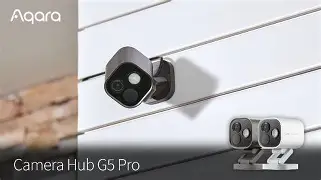
The Legacy of the Aqara Camera Hub G350
The Aqara G350 earned its reputation by being a "Swiss Army Knife" for the Apple HomeKit and Matter ecosystems. It wasn't just a camera; it was a dual-band Wi-Fi hub capable of managing dozens of child devices, ranging from contact sensors to water leak detectors. For most users, the G350 represented the pinnacle of consumer-grade edge processing. Its ability to recognize gestures, identify specific family members through local facial recognition, and follow movement with a smooth 360-degree pan-and-tilt motor made it a favorite for those who wanted a "smart" presence in their living room.
However, as smart homes grow more complex, the G350 has begun to show its age in specific areas. While its 2K sensor is crisp, it often struggles with high dynamic range (HDR) scenes where bright windows meet dark interior shadows. Furthermore, its reliance on a physical motor for tracking introduces a mechanical point of failure and a slight audible whir that some users find intrusive in quiet environments. These small friction points are exactly what next-generation devices like The Cosmic Abyss aim to eliminate.
Enter Cthulhu The Cosmic Abyss
Cthulhu The Cosmic Abyss represents a radical departure from the "cute" or "industrial" designs of previous years. Where the Aqara G350 attempts to look like a friendly desktop companion, The Cosmic Abyss focuses on an aesthetic of invisibility and omnipresence. It is marketed not just as a camera, but as a "spatial awareness engine." Instead of a mechanical head that turns to look at you, The Cosmic Abyss uses a multi-lens computational array that captures a 720-degree spherical field of view simultaneously. This means there are no blind spots, no motor noise, and no "cooldown" period where the camera has to reset its position.
The core philosophy of The Cosmic Abyss is "passive observation." It leverages a proprietary neural processing unit (NPU) that doesn't just look for faces or pets but maps the entire volume of a room. It understands depth, velocity, and intent. If the G350 knows that someone is in the kitchen, The Cosmic Abyss knows that the person is reaching for a specific cabinet and can trigger automations based on that specific spatial coordinate. It is this depth of data that justifies its place in the modern smart home.
Find top-rated Electronics products at great prices.
View Offers →Technical Comparison and Performance Analysis
When comparing these two devices, the conversation usually starts with image quality and ends with ecosystem integration. The G350 uses a traditional CMOS sensor optimized for clarity in standard lighting. It excels at local storage and privacy, offering a physical privacy shutter that tucks the lens away. Cthulhu The Cosmic Abyss, conversely, uses a photon-counting sensor technology that allows for full-color night vision in near-total darkness without the need for visible infrared LEDs that can alert intruders to the camera's location.
In terms of hub capabilities, the G350 is a Zigbee 3.0 powerhouse. It is reliable for those who have invested heavily in the Aqara ecosystem of sensors. The Cosmic Abyss, however, treats Zigbee as a legacy protocol, prioritizing Thread/Matter and Ultra-Wideband (UWB) for device tracking. This makes The Abyss far more future-proof for users who are planning to integrate the next wave of "precision" smart home devices that require centimeter-level location data to function properly.
Comparative Analysis Table
| Feature | Aqara Camera Hub G350 | Cthulhu The Cosmic Abyss |
|---|---|---|
| Field of View | 360° Horizontal (Motorized) | 720° Spherical (Static Array) |
| Sensor Resolution | 2K (1296p) | 8K Computational Flux |
| Night Vision | IR Black and White | Full-Color Photon-Counting |
| Hub Protocols | Zigbee 3.0, Wi-Fi 6 | Thread, Matter, UWB, Wi-Fi 7 |
| Edge AI | Facial/Gesture/Pet Recognition | Volumetric Spatial Mapping |
| Privacy | Physical Lens Shutter | Silcon-Level Data Encryption |
Pros and Cons: Aqara Camera Hub G350
- Pro: Friendly Design - The physical "ears" and expressive LED indicators make it feel like a part of the family rather than a cold piece of surveillance tech.
- Pro: Physical Privacy - The ability to see the lens physically rotate into the housing provides an unmatched level of mental comfort regarding privacy.
- Pro: Established Ecosystem - It works flawlessly with the extensive and affordable line of Aqara sensors, which are widely considered some of the best value in the industry.
- Con: Mechanical Latency - Because it relies on a motor to track subjects, there is a perceptible lag when a fast-moving object (like a running pet) crosses the frame.
- Con: Resolution Limits - While 2K is sufficient for now, it lacks the digital zoom capabilities required to read text or identify small details from across a large room.
Pros and Cons: Cthulhu The Cosmic Abyss
- Pro: Total Surveillance - The spherical FOV ensures that no incident is ever missed due to the camera facing the "wrong way."
- Pro: Advanced Low Light - The ability to see in the dark without IR "red glow" makes it ideal for nurseries or high-security entrance points.
- Pro: Future-Proof Connectivity - With Wi-Fi 7 and Thread support, it acts as a robust backbone for the next decade of smart home evolution.
- Con: Abstract Aesthetic - Its futuristic, non-standard shape may not blend well with traditional or rustic home decor.
- Con: Data Overhead - The sheer amount of spatial data it generates requires a very high-quality home network to prevent stuttering in the live feed.
The Buying Guide: Who Should Upgrade?
Determining if you need to replace your G350 depends largely on your "smart home maturity." The G350 remains an excellent starter and mid-range choice for those who want a reliable camera that doubles as a bridge for a few door sensors. If your current setup is working without hitches and you aren't feeling the "blind spot" anxiety of a motorized camera, a replacement might be premature.
However, for the power user, The Cosmic Abyss offers three specific advantages that justify the cost of the transition. First is the spatial automation. If you want your lights to dim only when you sit on the couch, and not just because you walked into the room, the volumetric mapping of The Abyss is the only way to achieve that without complex third-party presence sensors. Second is the security professional's requirement. If you are monitoring a high-value area, the 8K resolution and 720-degree field of view mean you can digitally zoom into any corner of the room after an event has occurred, even if the camera wasn't "looking" there at the time. Third is the Matter-over-Thread backbone. As the industry moves away from proprietary Zigbee bridges, having a high-bandwidth Thread border router like The Cosmic Abyss ensures your home remains compatible with new devices from any manufacturer.
Buyers should also consider their physical environment. The G350 is best suited for corners or shelves where its motor can cover the most ground. The Cosmic Abyss, on the other hand, is most effective when mounted centrally or in a position where its spherical lenses can "see" the entire volume of air in a space. If your home has an open floor plan, the upgrade to The Abyss will feel like a massive leap forward. If you are monitoring a small, narrow hallway, the G350 is likely more than enough.
Find top-rated Electronics products at great prices.
Shop Amazon →Real-World Use Cases
Contrast a typical morning routine using both devices. With the Aqara G350, you might use a hand gesture to turn off your alarm and start the coffee maker. The camera identifies your face, follows you as you walk toward the kitchen, and clicks its motor to stay centered on you. It is a functional, reactive experience that feels high-tech but still anchored in 2020s logic.
With Cthulhu The Cosmic Abyss, the interaction is more ambient. You don't need to gesture at the device. It knows the moment you sit up in bed. It calculates that your movement toward the kitchen is a "morning trajectory" and begins pre-heating the kitchen floor and brewing coffee because it understands your physical context within the home's 3D map. There is no mechanical whirring, no "watching" eyes; just a house that seems to know where you are and what you need. This shift from reactive to proactive monitoring is the hallmark of the transition to the Cosmic Abyss era.
Conclusion
The Aqara Camera Hub G350 remains a highly competent, versatile device that serves as a benchmark for what a smart hub should be. It is reliable, aesthetically pleasing, and deeply integrated into the world's most popular smart home platforms. For many, it will continue to provide years of excellent service without feeling obsolete. It is the "perfect" camera for the current generation of smart home tech.

However, Cthulhu The Cosmic Abyss is not looking at the current generation; it is looking at the next. By moving away from mechanical parts and toward a computational, volumetric approach to home awareness, it solves the inherent flaws of traditional pan-and-tilt cameras. The elimination of blind spots, the inclusion of cutting-edge networking protocols, and the move toward photon-level imaging make it a compelling choice for those who want their home to feel truly "aware." If you are someone who finds yourself frustrated by the limitations of motorized tracking, or if you are ready to build a home on the foundation of Matter and Thread, the upgrade to The Cosmic Abyss represents the most significant leap in domestic technology since the introduction of the smart hub itself.